 News
News‘Not for sale’: UEFA’s 55 nations vote to boycott FIFA over a $20bn sell-off
UEFA’s 55 member nations have voted unanimously to boycott all future FIFA competitions, the World Cup included, in protest at Gianni Infantino’s plan to sell a stake in a new $20bn commercial arm to private investors led by Joshua Kushner’s Thrive Eternal. Europe says the game “is not for sale”; Infantino has offered every federation $20 million to approve the deal by September 19. KFF on football’s civil war, and the impossible choice now facing Africa.
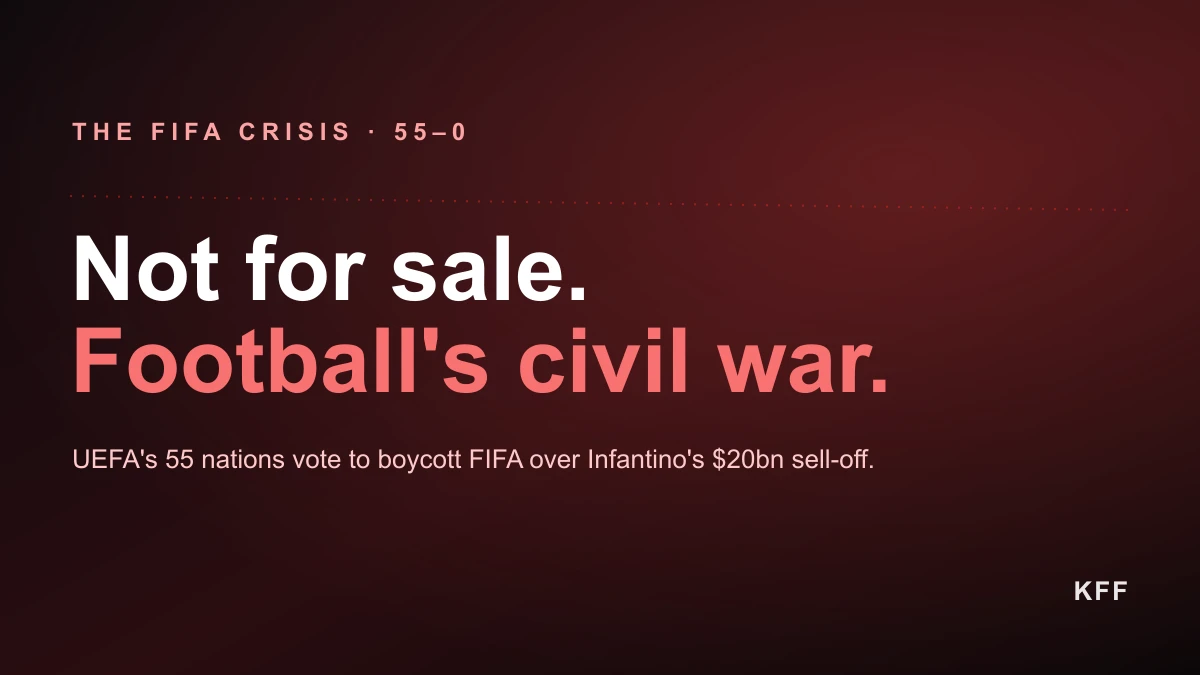
The 2026 World Cup is barely a fortnight into the history books, and football is already at war with itself. UEFA's fifty-five member nations have voted unanimously, 55-0, to boycott all future FIFA competitions, the World Cup included, in protest at a plan to sell a slice of the game to private investors. "The World Cup," Europe declared, "is not for sale." The most powerful confederation in the sport has just gone to war with its own governing body.
At the heart of it is a proposal from FIFA president Gianni Infantino, revealed after being drawn up largely in secret, to spin off FIFA's commercial and event operations into a new twenty-billion-dollar company called FIFA Forward Enterprise. FIFA would sell a twenty percent stake to private investors, raising a reported 4.2 billion dollars, with the group said to be led by the American venture-capital firm Thrive Eternal, founded by Joshua Kushner.
Europe is incandescent. UEFA says the plan was hatched with "zero transparency" and warns that letting private money buy into the World Cup would put commercial pressure on sporting decisions and hollow out the soul of the game. Its response was nuclear: no European national team will play in any FIFA tournament while the proposals live, a ban that reaches the 2030 men's World Cup, itself co-hosted by Spain, Portugal and Morocco, the 2027 women's World Cup in Brazil, and the youth competitions too.
And the leverage is real. Europe holds six of the world's top ten ranked nations and has won thirteen of the last men's World Cups. A World Cup without them would be a hollow, commercially gutted shell, and the fifteen-billion-dollar machine we wrote about only days ago suddenly looks a great deal more fragile than it did on final night.
But Infantino has a card of his own, and it is aimed squarely at federations like ours. He has dangled twenty million dollars in immediate funding for every one of FIFA's 211 member associations that approves the deal by the nineteenth of September. For a European giant, twenty million is a rounding error. For a cash-strapped African association running on fumes, it is transformative, the kind of money that builds pitches, pays coaches and keeps the lights on. This is not a coincidence. It is a test, principle against survival, and Infantino knows exactly which federations he is squeezing.
The battle lines are still forming. CONCACAF has rejected the proposal but stopped short of a boycott, and Asia's AFC has pushed back too, yet neither has matched Europe's fury. Africa's CAF, and Kenya's own FKF, now face perhaps the hardest choice in the modern game: stand with Europe's principle, or take the money that could change everything back home. There are no easy answers here, and no clean hands. Ulaya wamesema hapana, lakini Infantino ameweka dola milioni ishirini mezani kwa kila shirikisho, na Afrika sasa lazima ichague kati ya msimamo na pesa: Europe has said no, but Infantino has put twenty million dollars on the table for every federation, and Africa must now choose between principle and money.
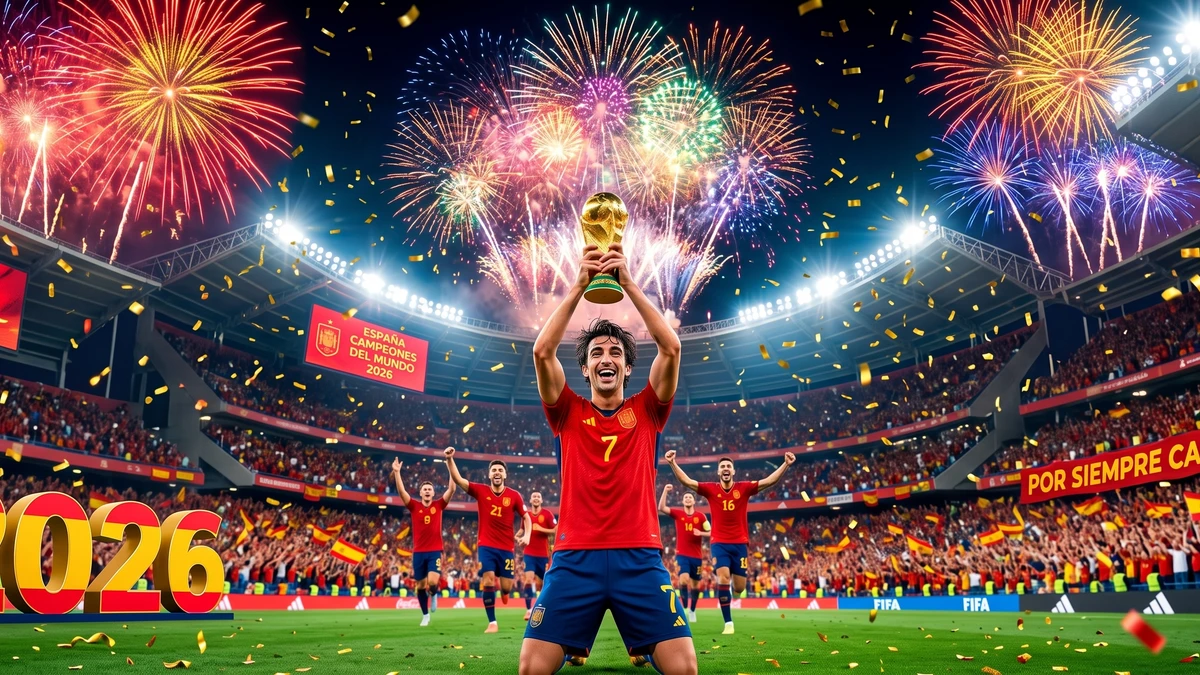
Two weeks ago the game gave us Spain's coronation and Messi's farewell, football at its most beautiful. Now it gives us a civil war over who owns it, football at its most naked. The 2026 World Cup may yet be remembered as much for the fight over the money that followed as for anything that happened on the pitch. And this one is only just beginning.
Your team needs you. Have your say.
Vote for your team